
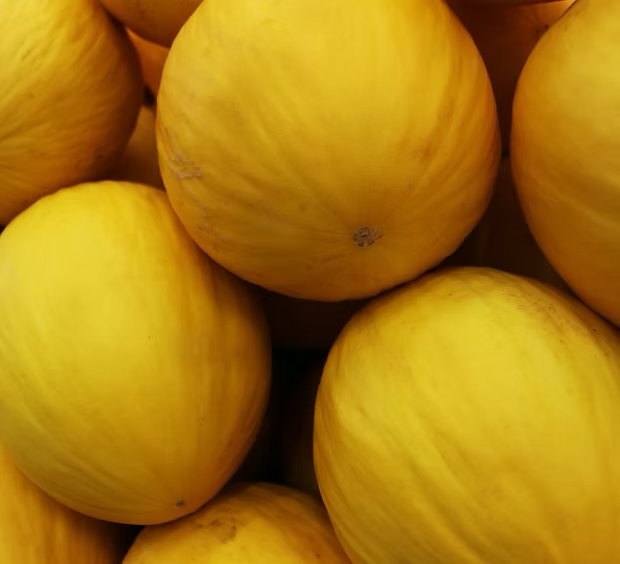
Melons
Specialty and conventional melon programs for retail, wholesale, and foodservice.
Specification
Sizes and packaging differ by variety and are listed with each one below. Ask your desk to confirm counts and grades for your program.
- Varieties
- Honeydew, Cantaloupe, Hami, Piel de Sapo
- Origin
- Grown throughout Mexico
- Ships from
- Agrivera West · Rio Rico, Arizona
- Labels
- Sonora Gardens® and Agrivera®
- Availability window
- November to May
- Case labelling
- GS1 standards, PTI case-level labelling
Quoting this program
This program ships from Agrivera West in Rio Rico, Arizona. Sales runs on +1 (855) 848 6824 ext. 1, or email saleswest@agrivera.com.
Varieties
Four varieties on this program, with the sizes and packaging each one ships in. Tell your desk which you need and we will quote them.

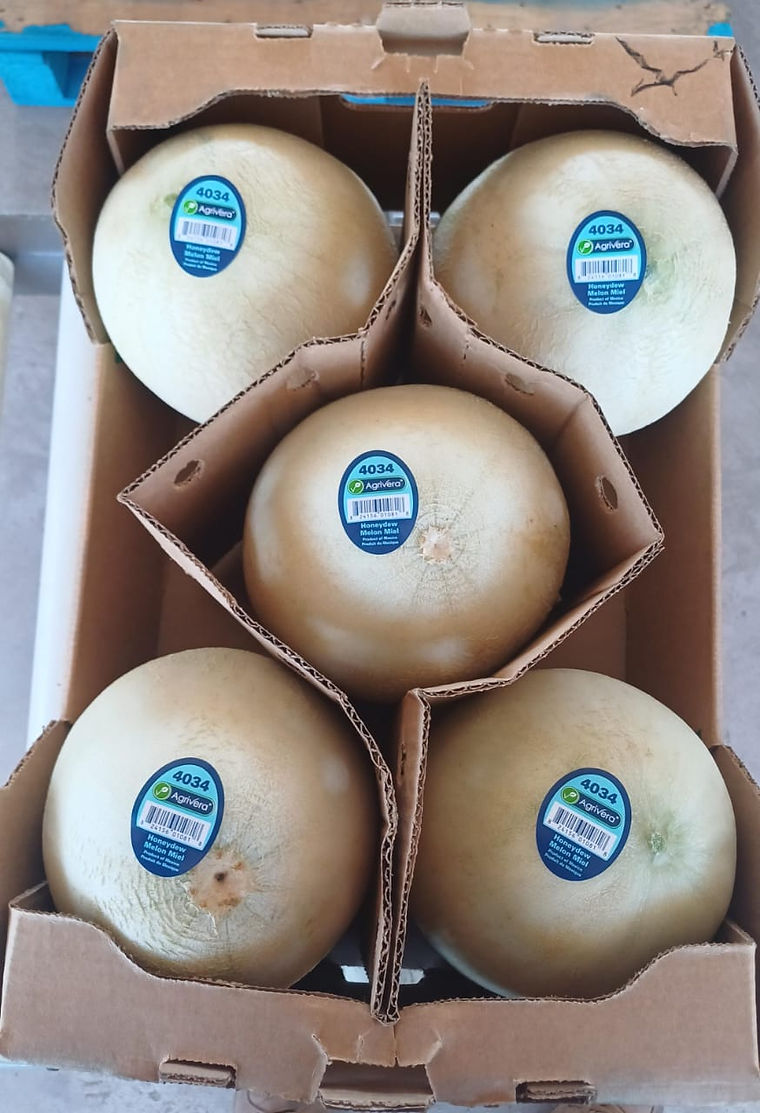
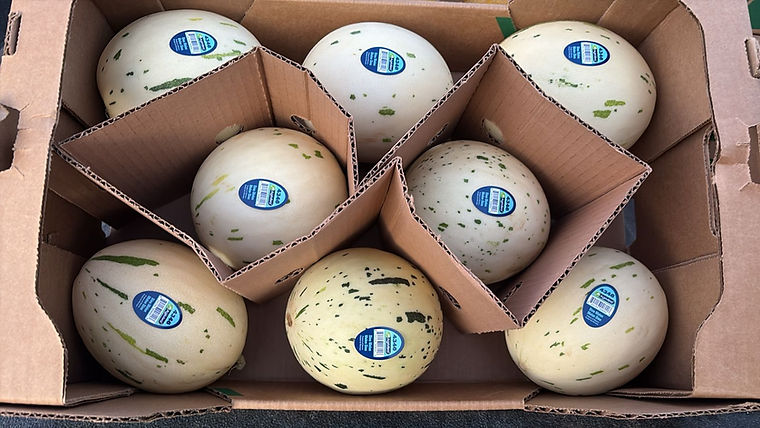
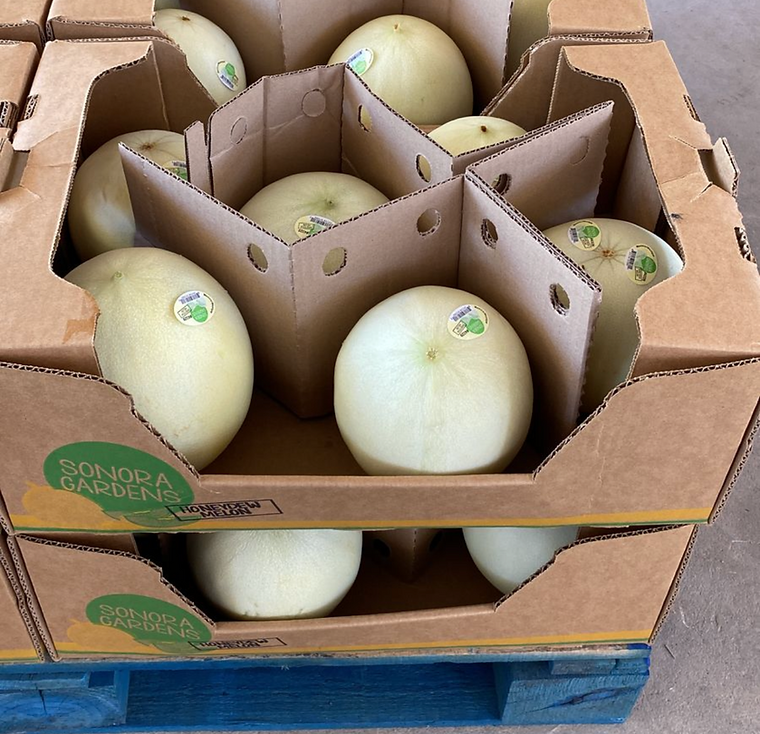
Honeydew
- Sizes
- 4's, 5's, 6's, 8's
- Packaging
- cartons; bins

Cantaloupe
- Sizes
- 9's, 12's, 16's
- Packaging
- cartons

Hami
- Sizes
- 4's, 5's, 6's, 8's
- Packaging
- cartons
%20isolated%20on%20white%20background%20green%20stri.jpg)
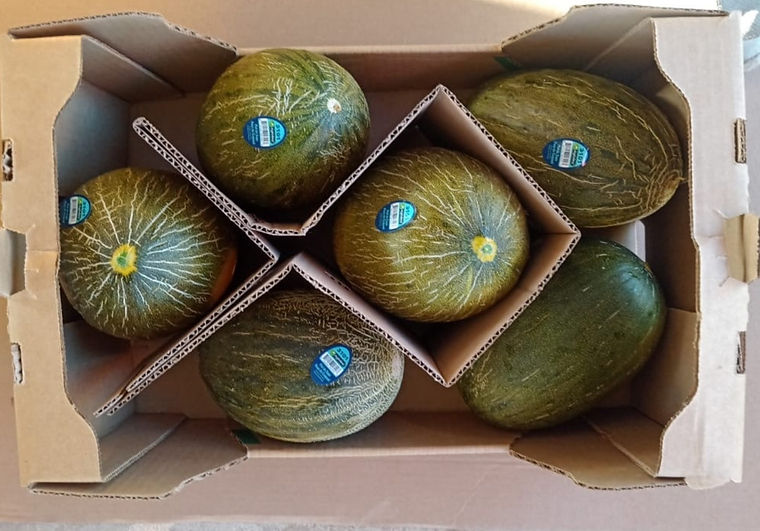
Piel de Sapo
- Sizes
- 4's, 5's, 6's, 8's
- Packaging
- cartons
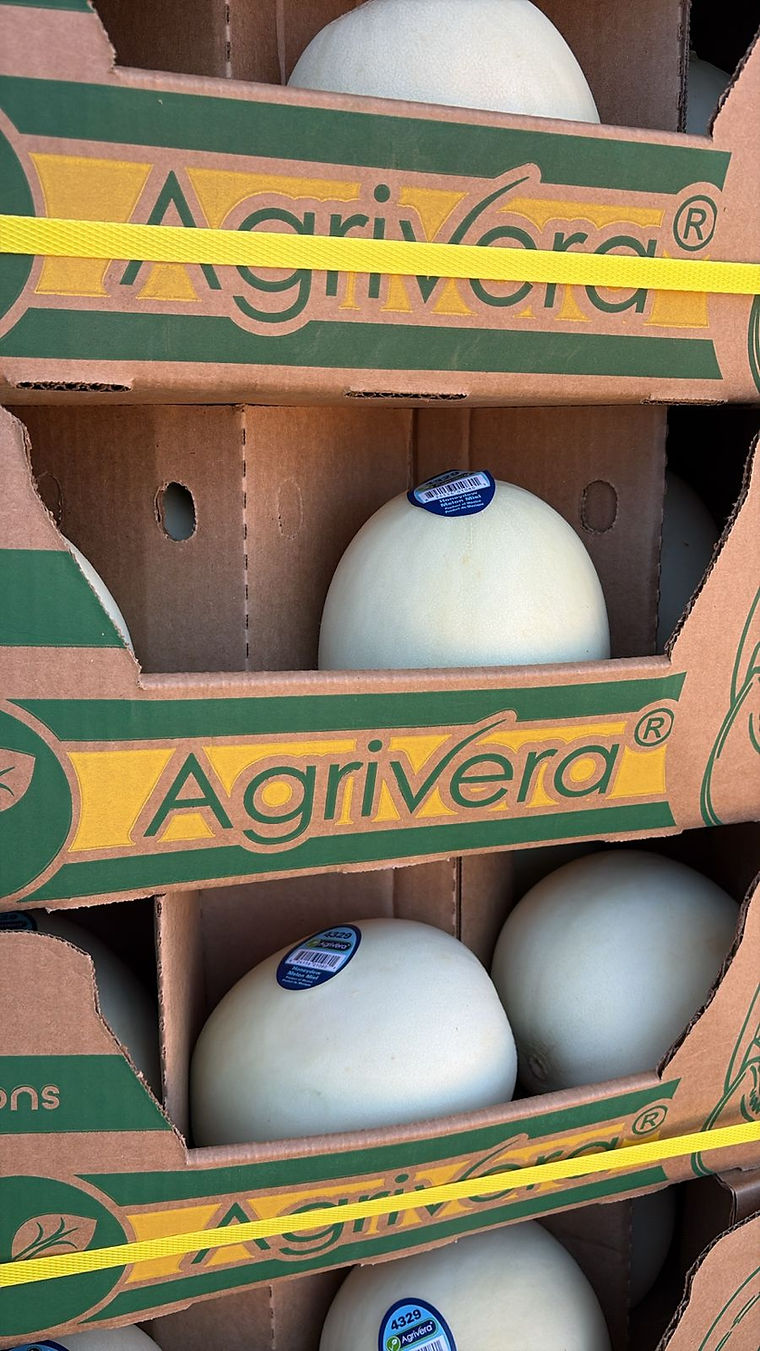
Packed under our label
About the varieties
Honeydew
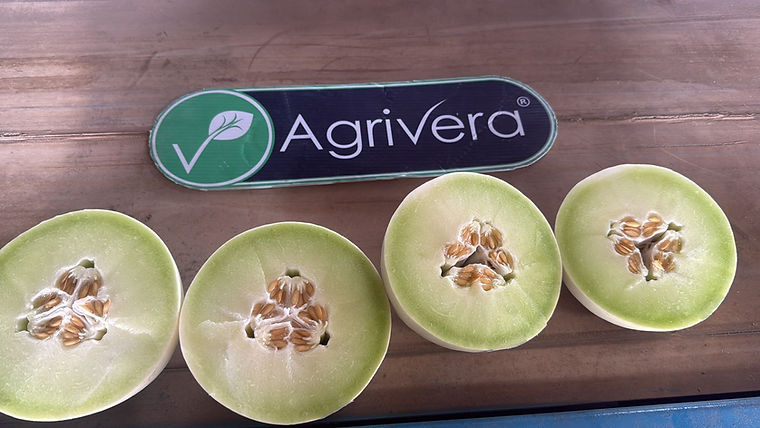
Honeydew melons are part of the winter melon group (inodorus), which also includes casaba and Crenshaw melons. The honeydew variety was cultivated in Persia and North Africa for centuries.
It was introduced to France and Spain, where it was known as White Antibes melon. Eventually, it made its way to the U.S. in the early 20th century, gaining popularity for its long shelf life and sweet, refreshing taste—especially in California and Arizona, where it's now widely grown.
Key Benefits
- Hydrating and refreshing due to high water content
- Good source of vitamin C, which boosts immunity and skin health
- Contains potassium, supporting hydration and heart function
- Naturally low in fat and calories, making it ideal for light diets
- A source of B vitamins like folate, helpful for cell function
Fun Facts
- Not just green: Though pale green is most common, honeydew flesh also comes in orange (in specialty cultivars like Orange Dew).
- Sweeter when chilled: Honeydew tastes sweeter when served cold, as chilling enhances its delicate sugar content.
- Long shelf life: Unlike cantaloupe, honeydew can be stored longer without quickly over-ripening.
- Rind = ripeness: A creamy yellow rind with slight softness indicates ripeness. Green rind means it's still underripe.
- Pairs beautifully: Honeydew complements prosciutto, mint, lime, berries, and is excellent in fruit salads, smoothies, or chilled soups.
Cantaloupe
Cantaloupe originated in Persia and parts of the Middle East over 4,000 years ago. It spread through trade to North Africa and Europe, where it was cultivated in the Papal gardens of Cantalupo, Italy—hence the name "cantaloupe."
The North American "cantaloupe" is actually a type of muskmelon, differing slightly from the European variety, which has smoother skin and lighter flesh. In the U.S., cantaloupe became a major crop by the 20th century, especially in California, Arizona, and Colorado.
Key Benefits
- Rich in vitamin C and beta-carotene, great for skin and immune health
- Hydrating due to high water content (~90%)
- Good source of potassium, which supports heart health and muscle function
- Low in calories and fat—perfect for refreshing diets
- Supports eye health thanks to its high vitamin A content
Fun Facts
- Aroma = ripeness: A ripe cantaloupe gives off a distinct sweet aroma from the blossom end.
- Name confusion: In the U.S., what’s called “cantaloupe” is actually a netted muskmelon; true cantaloupes (grown in Europe) have smooth, warty rinds.
- Quick to ripen: Once harvested, cantaloupes ripen quickly at room temperature—best eaten within a few days.
- High food safety risk: Due to its rough rind, cantaloupe has a higher risk of carrying surface pathogens like salmonella—always wash before cutting.
- Peak season: In North America, cantaloupes are best from June to September when they’re sweetest and most fragrant.
Hami
Hami melons originate from Hami, in Xinjiang province, western China, and have been cultivated for over 700 years—dating back to the Tang Dynasty. These melons flourished along the Silk Road, where dry desert conditions helped concentrate their natural sugars.
Known for their exceptional sweetness and long shelf life, Hami melons were once reserved for Chinese royalty and were considered a luxury fruit. Today, they are a key agricultural product of Xinjiang and are exported globally.
Key Benefits
- Naturally high in vitamin C, promoting immunity and skin health
- Very hydrating with high water content and natural electrolytes
- Low in calories, ideal for weight-conscious diets
- High sugar concentration offers quick energy—great for summer refreshment
- Rich in antioxidants and carotenoids, especially in orange-fleshed varieties
Fun Facts
- Crisp and sweet: Compared to cantaloupe, Hami melon is sweeter, firmer, and crunchier, almost like a cross between honeydew and Asian pear.
- Desert-grown advantage: The dry, sunny climate of Xinjiang enhances sugar development, making Hami one of the sweetest melon varieties.
- Royal origins: Historically known as “tribute melon” because it was sent to the Chinese imperial court.
- Storage star: Hami melons can last several weeks when stored cool, making them excellent for transport and market display.
- Not just orange: While most common in orange flesh, there are also green- and white-fleshed Hami varieties with equally sweet flavor profiles.
Piel de Sapo
The Piel de Sapo melon is native to Spain, where it has been grown for centuries—especially in the La Mancha region. It’s a staple of Spanish summer cuisine, often enjoyed chilled or with cured meats like jamón.
Also known as Santa Claus melon or Christmas melon in English-speaking markets, it earned that nickname because of its long shelf life, allowing it to be stored into the winter holiday season.
In recent decades, Piel de Sapo has grown in popularity in Latin America, California, Brazil, and Australia, thanks to its reliability, sweetness, and excellent transportability.
Key Benefits
- High in vitamin C, great for skin and immune support
- Naturally hydrating and low in calories
- Contains potassium, supporting blood pressure and heart health
- Easy to digest and mild on the stomach
- A healthy, low-fat snack with natural sugars and fiber
Fun Facts
- “Toad skin” name: The name Piel de Sapo comes from its speckled, wart-like rind, which resembles a toad’s skin—but it’s just for show, the inside is sweet and creamy.
- Long shelf life: Its thick rind helps it store well for weeks, sometimes up to 2 months, especially when kept cool.
- Spanish summer icon: Commonly eaten chilled in Spain during summer heat—often served with jamón serrano or in fruit platters.
- Low odor: Belongs to the inodorus group, meaning “no scent”—unlike cantaloupe, it doesn’t emit a strong aroma when ripe.
- Ripeness test: Press gently on the blossom end—it should yield slightly. The melon also gains a slight yellow tint when ripe.
Also from Rio Rico, Arizona
Everything below ships from the same point of sale, so it can go on the same order.




Let's talk about your program
Tell us the categories, the volume, and the windows you need covered. We will come back with pricing and a supply plan.