

Specification
Sizes and packaging differ by variety and are listed with each one below. Ask your desk to confirm counts and grades for your program.
- Varieties
- Seeded and seedless, Mini, Black Diamond mini
- Origin
- Grown throughout Mexico
- Ships from
- Agrivera West · Rio Rico, Arizona
- Labels
- Sonora Gardens® and Agrivera®
- Availability window
- Year-round
- Case labelling
- GS1 standards, PTI case-level labelling
Quoting this program
This program ships from Agrivera West in Rio Rico, Arizona. Sales runs on +1 (855) 848 6824 ext. 1, or email saleswest@agrivera.com.
Varieties
Three varieties on this program, with the sizes and packaging each one ships in. Tell your desk which you need and we will quote them.

Seeded and seedless
- Sizes
- 4's, 5's, 6's, 8's
- Packaging
- cartons; bins

Mini
- Sizes
- 6's, 8's, 9's, 11's
- Packaging
- cartons; bins
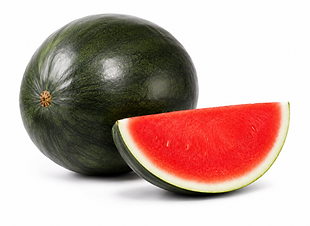
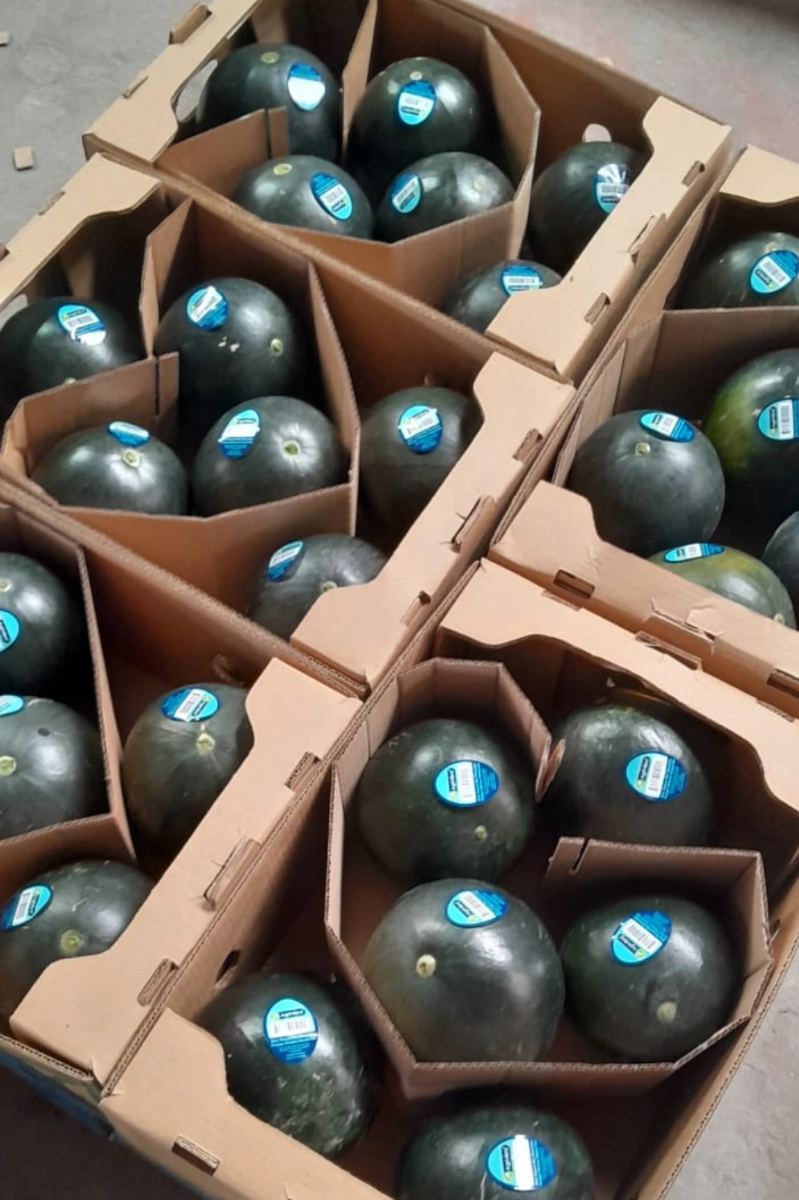
Black Diamond mini
- Sizes
- 5's, 6's, 8's, 9's
- Packaging
- cartons; bins
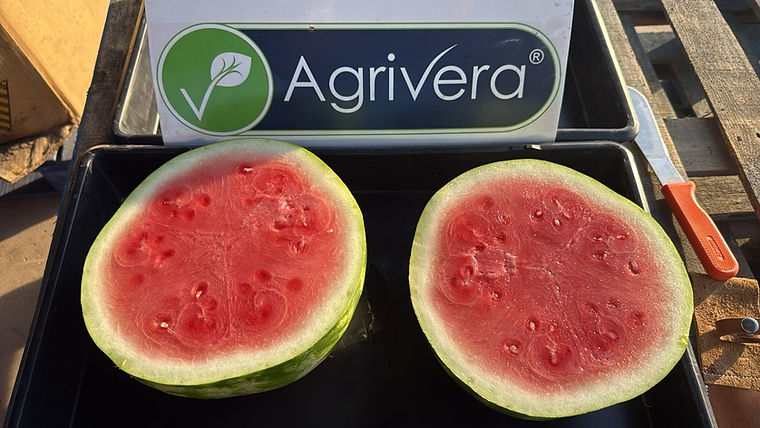
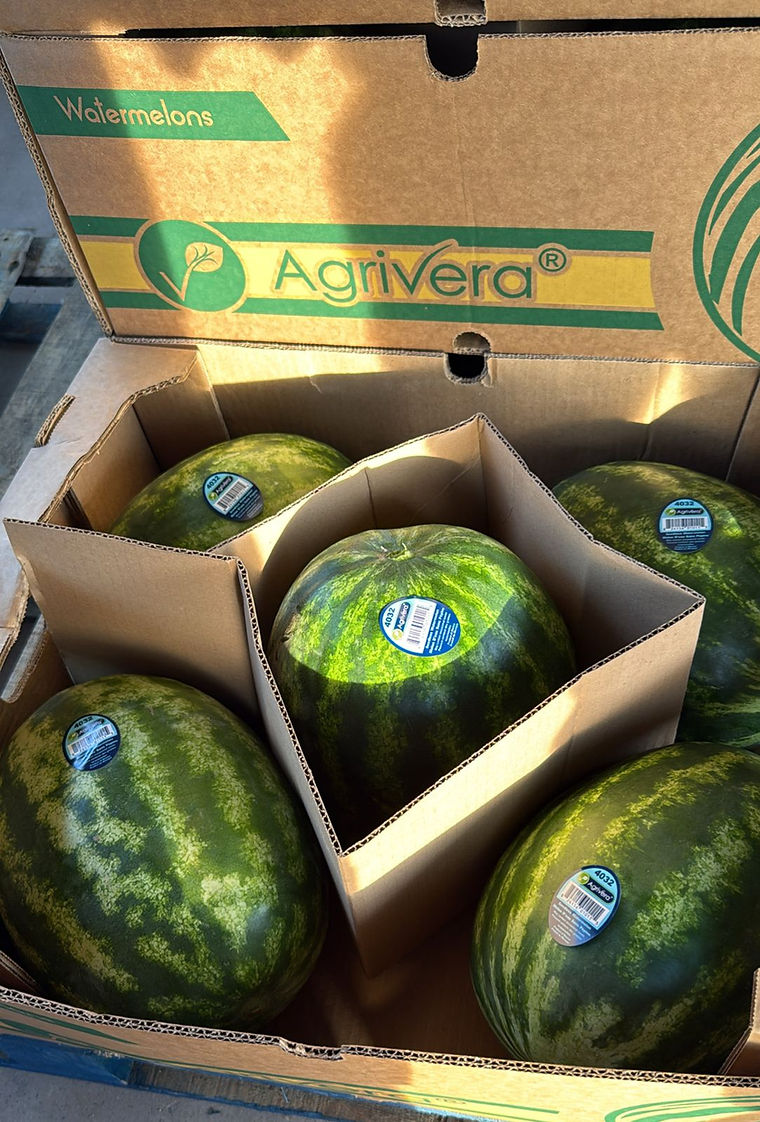
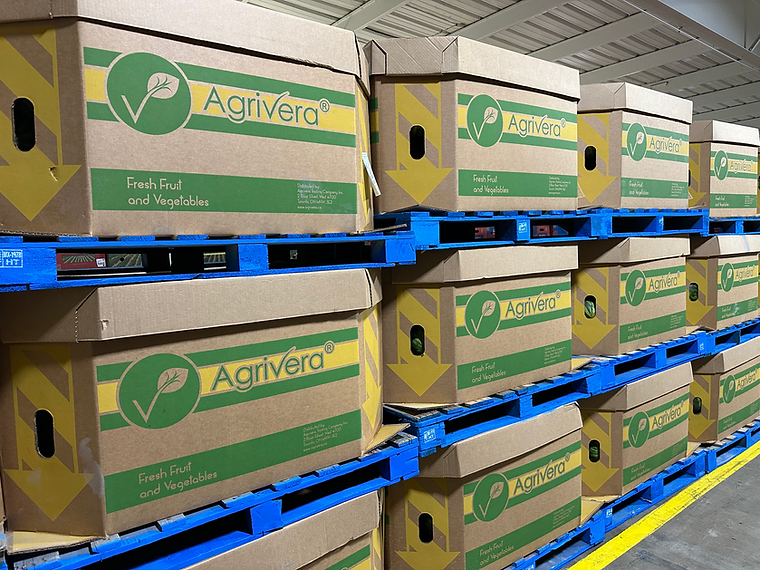
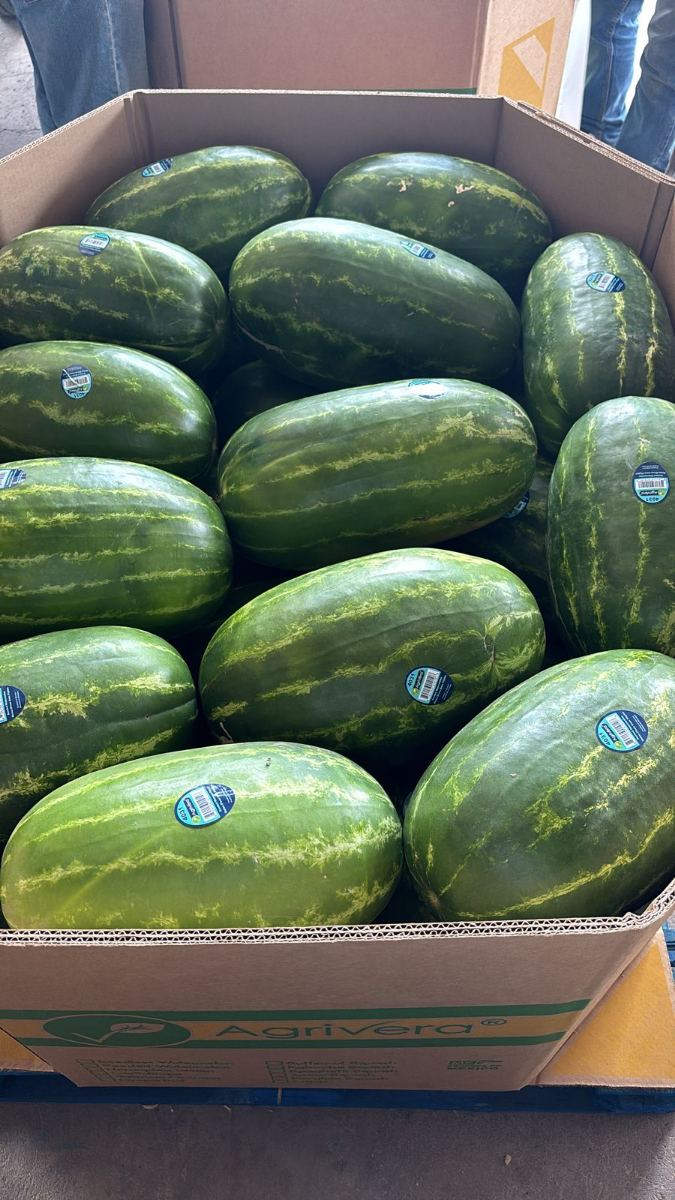
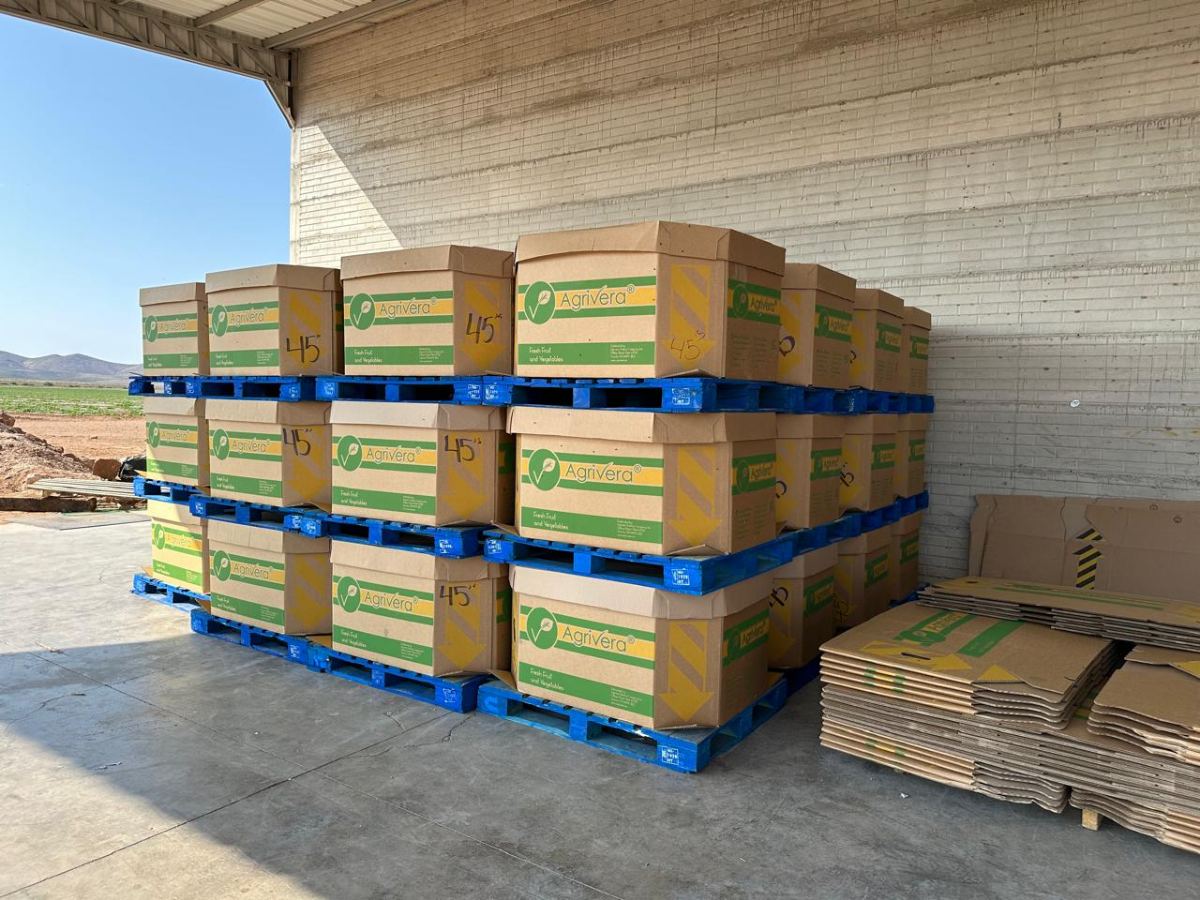
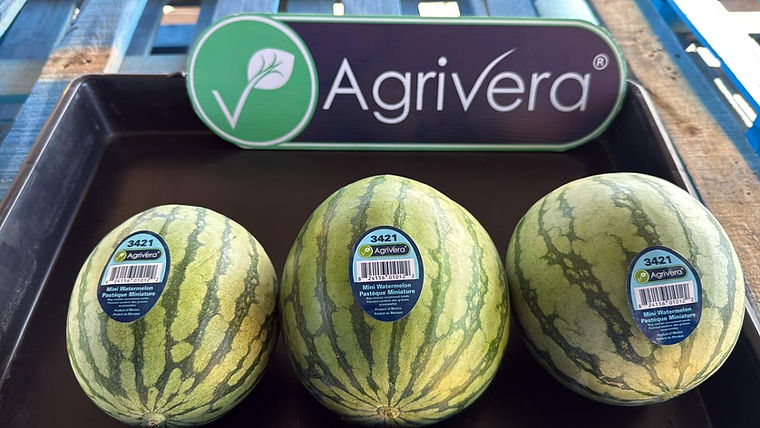
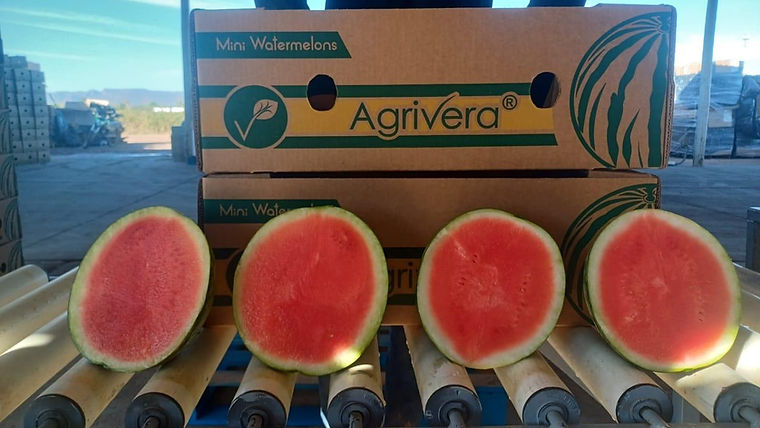
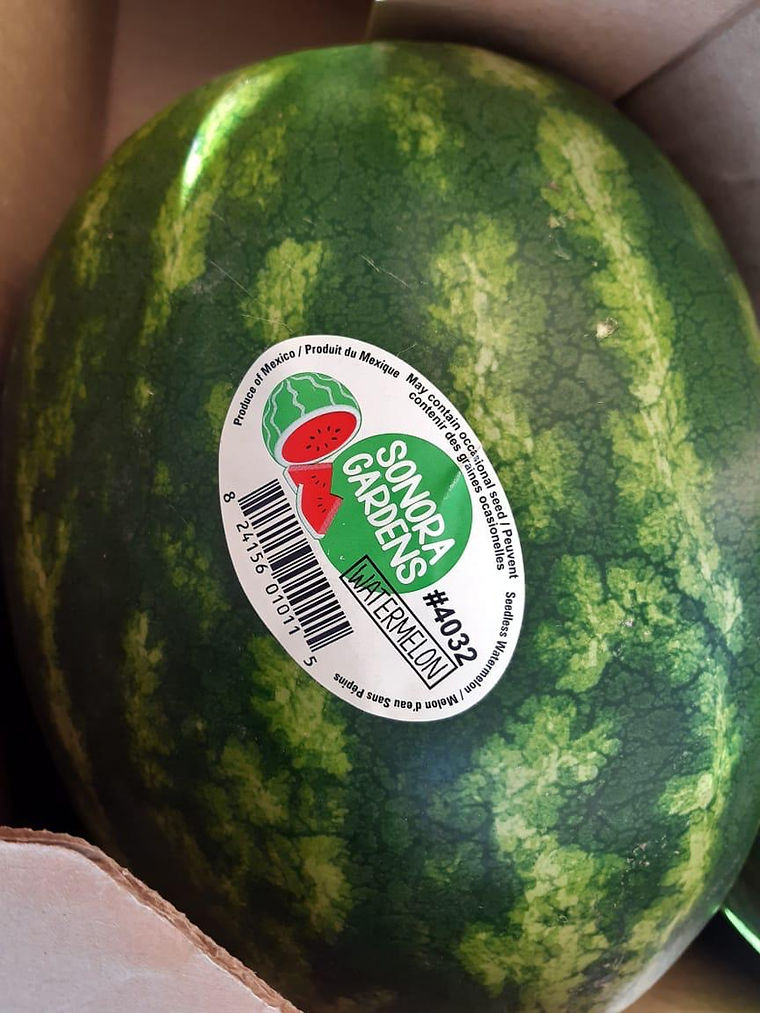
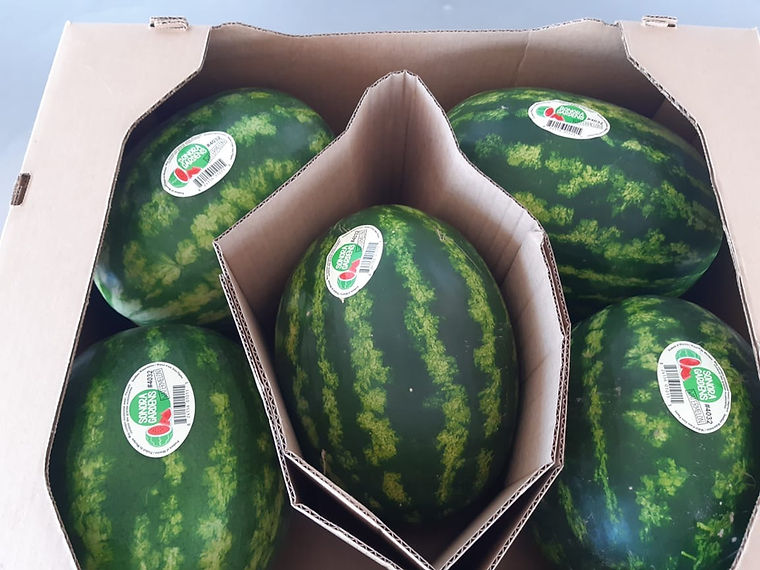
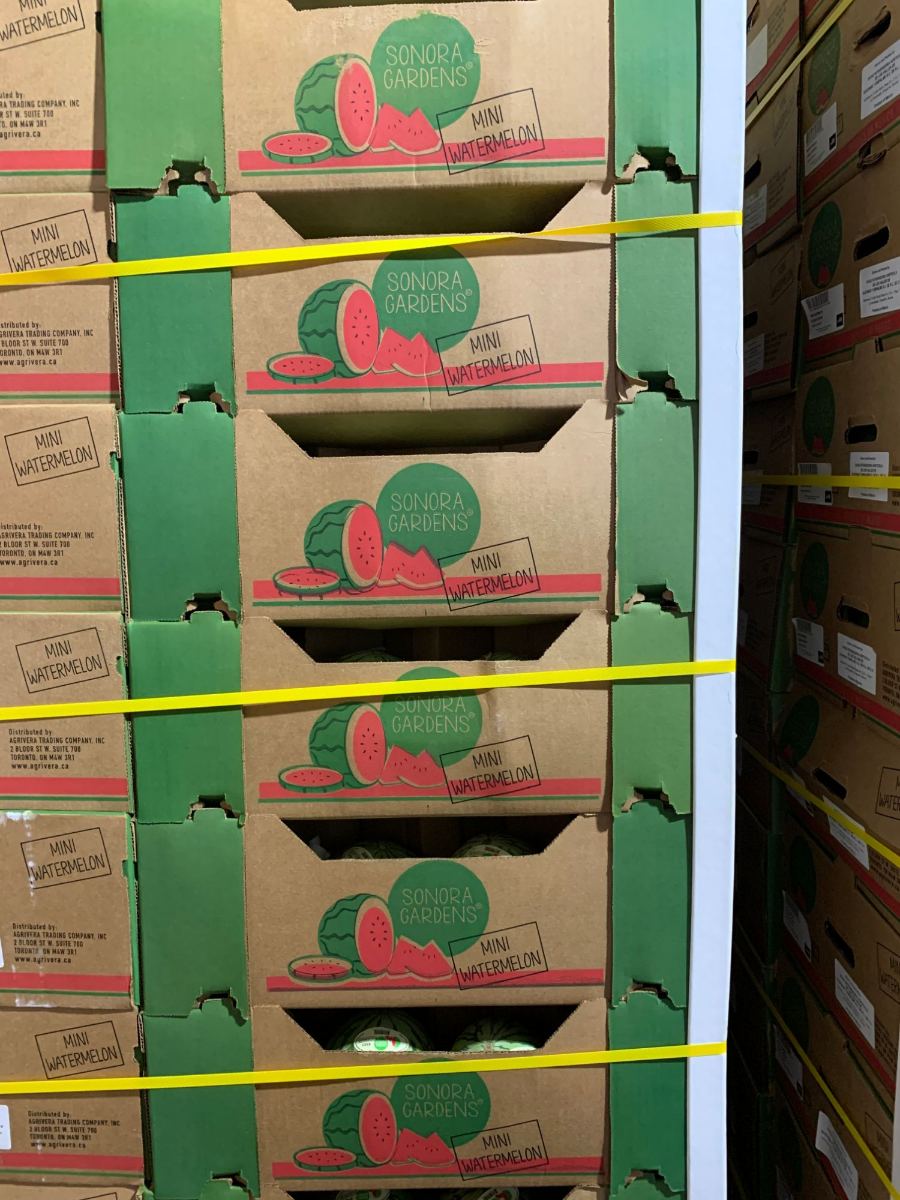
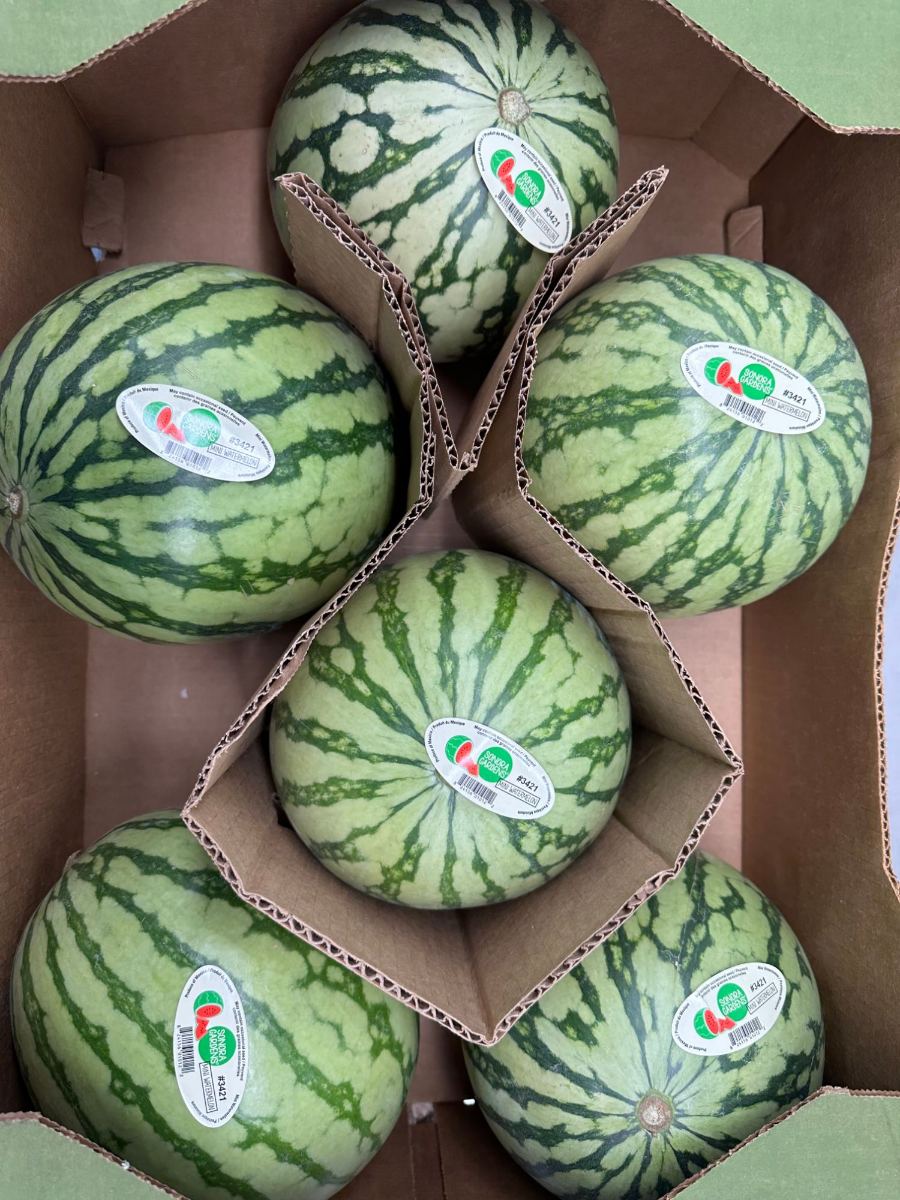
Packed under our label
About the varieties
Seeded and seedless
Watermelons are believed to have originated in northeastern Africa, possibly Egypt or Sudan, over 5,000 years ago. Ancient Egyptians cultivated watermelons, and seeds have been found in tombs, including King Tutankhamun’s.
From Africa, the watermelon spread to the Mediterranean, India, and China, eventually arriving in the Americas with European explorers. The seeded watermelon is the original form of the fruit and remained dominant in agriculture until the development of seedless hybrids in the 20th century.
Today, seeded watermelons are still grown commercially and for home gardens, particularly for those who value heirloom varieties, stronger flavor, or better storage performance.
Key Benefits
- Naturally high in lycopene, a powerful antioxidant
- Great source of hydration and low in calories
- Contains citrulline, which may improve blood flow and reduce fatigue
- Rich in vitamins A and C for skin and immune support
- May have slightly more intense flavor than seedless varieties in some heirlooms
Fun Facts
- Seed = tradition: Seeded watermelons are often preferred in cultural or traditional recipes, and their seeds can be roasted and eaten like pumpkin seeds.
- Better shelf life: Seeded melons generally store better and ripen more uniformly than seedless varieties.
- Great for festivals: Seeded melons are used in seed-spitting contests, a classic summer tradition.
- Heirloom potential: Some varieties like Charleston Gray or Black Diamond are only available in seeded form and are prized for their old-fashioned flavor.
- Seeds have nutrition too: Watermelon seeds (when roasted) are rich in protein, magnesium, zinc, and healthy fats.
Mini
Seedless watermelons were first developed in Japan in 1939 by breeder Kihara Hitoshi, using a process that crosses a tetraploid (4 sets of chromosomes) with a diploid (2 sets) watermelon to create a triploid (3 sets) fruit—sterile and unable to produce mature seeds.
Commercial popularity surged in the 1990s and 2000s, especially in the U.S., Mexico, and southern Europe, as consumers sought convenient, no-mess fruit options. Today, seedless varieties dominate supermarket watermelon offerings.
Key Benefits
- Very hydrating, with one of the highest water contents among fruits
- Rich in lycopene, a powerful antioxidant that supports heart and skin health
- Contains citrulline, an amino acid that may help with muscle recovery and circulation
- Low in calories, fat-free, and cholesterol-free
- Natural source of vitamins A and C
Fun Facts
- Not GMO: Seedless watermelons are not genetically modified—they are created through natural cross-breeding and chromosome manipulation.
- White seeds are safe: The soft white seeds are undeveloped and completely edible—no spitting required!
- Most common variety today: Seedless watermelons now make up over 85% of watermelon sales in North America.
- Travel-friendly: Mini seedless varieties like "personal" watermelons are popular for portability and single servings.
- Chill before cutting: Seedless watermelons taste sweeter when chilled and are best stored whole at room temp, cut in the fridge.
Black Diamond mini
Mini watermelons are modern cultivars, developed through selective breeding—not genetic modification—to meet demand for convenient, single-serving fruits. First popularized in the early 2000s, they quickly became a staple in grocery stores across North America, Japan, and Europe.
They are available in both seeded and seedless varieties, and due to their smaller size, they tend to ripen faster, store better in refrigerators, and reduce waste—making them ideal for urban households, couples, or small families.
Key Benefits
- Portable and easy to handle—perfect for snacks, picnics, and kids
- High in vitamin C, hydrating, and naturally low in calories
- Rich in lycopene, a heart-healthy antioxidant
- Low glycemic index and gentle on digestion
- Typically fewer seeds and thinner rind than larger varieties
Fun Facts
- Grows faster: Mini watermelons mature in 70–80 days, compared to 90+ days for standard varieties.
- Fridge-friendly: Their compact size fits easily in standard refrigerators—no more wrestling with giant melons!
- Extra sweet: The flavor is often more concentrated, especially when grown in warm climates.
- Popular varieties: Include Sugar Baby, Solinda, Mini Love, and Extazy—some with red, others with yellow flesh.
- Lower waste: Mini watermelons reduce food waste and over-portioning, especially in small households.
Also from Rio Rico, Arizona
Everything below ships from the same point of sale, so it can go on the same order.





Let's talk about your program
Tell us the categories, the volume, and the windows you need covered. We will come back with pricing and a supply plan.